Dr Kristin Ladell
- Ar gael fel goruchwyliwr ôl-raddedig
Timau a rolau for Kristin Ladell
Darllenydd Clinigol
Trosolwyg
Diddordebau ymchwil allweddol
1. Datblygiad cynnar a chynnal yr ymateb imiwnedd cellog addasol dynol yn dilyn actifadu antigen-benodol, mewn cyflwr o actifadu imiwnedd cronig, awtoimiwnedd, a chanser. Rwy'n defnyddio cytometreg llif sbectrol ar gyfer nodweddu ffenoteipig a swyddogaethol ac ar gyfer didoli celloedd ar gyfer arbrofion cyd-ddiwylliant, tyfu clonau celloedd T a dadansoddiadau moleciwlaidd i lawr yr afon fel trawsgrifiad (e.e. 10X) gan gynnwys dilyniannu derbynyddion celloedd T sengl a swmp (TCR) a'r assay hyd telomerau celloedd sengl (mewn cydweithrediad â'r Athro Duncan Baird, Canser a Geneteg, Ysgol Feddygaeth Prifysgol Caerdydd).
2. Y trajectories gwahaniaethu a'r rhyngberthynas rhwng is-setiau celloedd T CD4 + gan gynnwys babanod a anwyd yn gynamserol (https://fundingawards.nihr.ac.uk/award/NIHR156651).
3. Celloedd T antigen-adweithiol lipid wedi'u cyfyngu gan glycoproteinau CD1 a sut maent yn cyfrannu at risg cardiofasgwlaidd mewn hypercholesterolemia teuluol a diabetes math 1.
4. Mewn cydweithrediad, rôl celloedd T anghonfensiynol fel celloedd T gamma-delta a chelloedd MAIT mewn iechyd a chlefydau.
Cyhoeddiad
2026
- Marsden, M. et al. 2026. Cytomegalovirus-induced T cell responses accelerate Alzheimer’s disease progression in mice. Brain awag043. (10.1093/brain/awag043)
- Keat, S. B. K. et al. 2026. Activation of the lectin pathway drives persistent complement dysregulation in long COVID. Immunology 178 (2), pp.261-268. (10.1111/imm.70110)
- Kotecha, S. J. et al. 2026. Randomised, double-blind, parallel group, placebo-controlled, trial of Bactek for the prevention of lower respiratory tract infections in preterm infants in the UK: BALLOON study - study protocol. BMJ Open 16 (3) e107929. (10.1136/bmjopen-2025-107929)
2025
- Ponsford, M. et al. 2025. TAP-I Deficiency presenting with chronic granulomatous rubella virus-driven cutaneous ulceration: a case report and scoping literature review. Journal of Clinical Immunology 46 1. (10.1007/s10875-025-01919-6)
- Lukyanov, D. K. et al., 2025. Splicing-aware scRNA-Seq resolution reveals execution-ready programs in effector Tregs. PLoS Computational Biology 21 (11) e1013682. (10.1371/journal.pcbi.1013682)
- Koftori, D. et al., 2025. Two distinct subpopulations of human stem-like memory T cells exhibit complementary roles in self-renewal and clonal longevity. PLoS Biology 23 (6) e3003179. (10.1371/journal.pbio.3003179)
- Gao, Y. et al., 2025. Identification of soluble biomarkers that associate with distinct manifestations of long COVID. Nature Immunology 26 , pp.692–705. (10.1038/s41590-025-02135-5)
- Lukyanov, D. K. et al., 2025. Repertoire-based mapping and time-tracking of T helper cell subsets in scRNA-Seq. Frontiers in Immunology 16 1536302. (10.3389/fimmu.2025.1536302)
2024
- Mora-Bitria, L. et al., 2024. Inhibitory KIRs decrease HLA class II-mediated protection in Type 1 Diabetes.. PLoS Genetics 20 (12) e1011456. (10.1371/journal.pgen.1011456)
- Giannoni, E. et al., 2024. Sepsis shapes the human γδ TCR repertoire in an age- and pathogen-dependent manner. European Journal of Immunology 54 (10) 2451190. (10.1002/eji.202451190)
- Dallan, B. et al., 2024. Age differentially impacts adaptive immune responses induced by adenoviral versus mRNA vaccines against COVID-19. Nature Aging 4 (8), pp.1121–1136. (10.1038/s43587-024-00644-w)
- Baillie, K. et al. 2024. Complement dysregulation is a prevalent and therapeutically amenable feature of long COVID. Med 5 (3), pp.239-253. (10.1016/j.medj.2024.01.011)
2023
- Roger, L. et al. 2023. T cell memory revisited using single telomere length analysis. Frontiers in Immunology 14 1100535. (10.3389/fimmu.2023.1100535)
- Rubina, A. et al. 2023. ADAM17 targeting by human cytomegalovirus remodels the cell surface proteome to simultaneously regulate multiple immune pathways. Proceedings of the National Academy of Sciences 120 (33) e2303155120. (10.1073/pnas.2303155120)
- Clement, M. et al. 2023. Inhibitory IL-10-producing CD4+ T cells are T-bet-dependent and facilitate cytomegalovirus persistence via coexpression of arginase-1. eLife 12 e79165. (10.7554/eLife.79165)
- Chen, Y. et al., 2023. Group A Streptococcus induces CD1a-autoreactive T cells and promotes psoriatic inflammation. Science Immunology 8 (84) eadd9232. (10.1126/sciimmunol.add9232)
- Ciacchi, L. et al., 2023. CD4+ T cell-mediated recognition of a conserved cholesterol-dependent cytolysin epitope generates broad antibacterial immunity. Immunity 56 (5), pp.1082-1097. (10.1016/j.immuni.2023.03.020)
- Shepherd, F. R. et al. 2023. The superantigens SpeC and TSST-1 specifically activate TRBV12-3/12-4+ memory T cells. Communications Biology 6 78. (10.1038/s42003-023-04420-1)
2022
- Goncharov, M. et al., 2022. VDJdb in the pandemic era: a compendium of T cell receptors specific for SARS-CoV-2. Nature Methods 19 (9), pp.1017–1019. (10.1038/s41592-022-01578-0)
- Fielding, C. A. et al. 2022. SARS-CoV-2 host-shutoff impacts innate NK cell functions, but antibody-dependent NK activity is strongly activated through non-spike antibodies. eLife 11 (10.7554/eLife.74489)
- Pymm, P. et al., 2022. Epitope length variants balance protective immune responses and viral escape in HIV-1 infection. Cell Reports 38 (9) 110449. (10.1016/j.celrep.2022.110449)
2021
- Campion, S. L. et al., 2021. Preexisting memory CD4+ T cells contribute to the primary response in an HIV-1 vaccine trial. Journal of Clinical Investigation 131 (23) e150823. (10.1172/JCI150823)
- Man, S. et al. 2021. Synthetic peptides with inadvertent chemical modifications can activate potentially autoreactive T cells. The Journal of Immunology 207 (4), pp.1009-1017. (10.4049/jimmunol.2000756)
- Clement, M. et al. 2021. CD8 coreceptor-mediated focusing can reorder the agonist hierarchy of peptide ligands recognized via the T cell receptor. Proceedings of the National Academy of Sciences 118 (29) e2019639118. (10.1073/pnas.2019639118)
- Vlachava, V. et al. 2021. Monoclonal antibodies targeting nonstructural viral antigens can activate ADCC against human cytomegalovirus. Journal of Clinical Investigation 131 (4) e139296. (10.1172/JCI139296)
- Hanna, S. J. et al. 2021. T cell phenotypes in COVID-19 - a living review. Oxford Open Immunology 2 (1)(10.1093/oxfimm/iqaa007)
2020
- Galletti, G. et al., 2020. Two subsets of stem-like CD8+ memory T cell progenitors with distinct fate commitments in humans. Nature Immunology 21 , pp.1552-1562. (10.1038/s41590-020-0791-5)
- Kasatskaya, S. A. et al., 2020. Functionally specialized human CD4+ T-cell subsets express physicochemically distinct TCRs. eLife 9 e57063. (10.7554/eLife.57063)
- Ahmed, R. et al., 2020. CD57+ Memory T Cells Proliferate In Vivo. Cell Reports 33 (11) 108501. (10.1016/j.celrep.2020.108501)
- Narayanan, G. A. et al., 2020. The MAIT TCRβ chain contributes to discrimination of microbial ligand. Immunology and Cell Biology 98 (9), pp.770-781. (10.1111/imcb.12370)
- Hanna, S. J. et al. 2020. Slow progressors to type 1 diabetes lose islet autoantibodies over time, have few islet antigen-specific CD8+ T cells and exhibit a distinct CD95hi B cell phenotype. Diabetologia 63 , pp.1174-1185. Diabetologia volume 63, pages1174–1185(2020). (10.1007/s00125-020-05114-7)
- Pearson, F. E. et al., 2020. Human CLEC9A antibodies deliver Wilms' tumor 1 (WT1) antigen to CD141+ dendritic cells to activate naïve and memory WT1‐specific CD8+ T cells. Clinical and Translational Immunology 9 (10.1002/cti2.1141)
- Edwards, S. C. et al., 2020. A population of proinflammatory T cells coexpresses αβ and γδ T cell receptors in mice and humans. Journal of Experimental Medicine 217 (5) e20190834. (10.1084/jem.20190834)
- Starke, C. E. et al., 2020. SIV-specific CD8+ T cells are clonotypically distinct across lymphoid and mucosal tissues. Journal of Clinical Investigation 130 (2), pp.789-798. (10.1172/JCI129161)
- Brenna, E. et al., 2020. CD4+ T follicular helper cells in human tonsils and blood are clonally convergent but divergent from Non-Tfh CD4+ cells. Cell Reports 30 (1), pp.137-152. (10.1016/j.celrep.2019.12.016)
- Smith, C. J. et al., 2020. Stochastic expansions maintain the clonal stability of CD8+ T cell populations undergoing memory inflation driven by murine cytomegalovirus. Journal of Immunology 204 (1), pp.112-121. (10.4049/jimmunol.1900455)
2019
- Appanna, G. D. et al. 2019. Rituximab depletion of intrahepatic B cells to control refractory hepatic autoimmune overlap syndrome. QJM: An International Journal of Medicine 112 (10), pp.793-795. (10.1093/qjmed/hcz161)
- Meckiff, B. J. et al., 2019. Primary EBV infection induces an acute wave of activated antigen-specific cytotoxic CD4+ T cells. Journal of Immunology 203 (3) ji1900377. (10.4049/jimmunol.1900377)
- Wong, E. B. et al., 2019. TRAV1-2+ CD8+ T-cells including oligoconal expansions of MAIT cells are enriched in the airways in human tuberculosis. Communications Biology 2 (1), pp.-. 203. (10.1038/s42003-019-0442-2)
- Mohammed, R. N. et al. 2019. ADAM17-dependent proteolysis of L-selectin promotes early clonal expansion of cytotoxic T cells. Scientific Reports 9 5487. (10.1038/s41598-019-41811-z)
- Li, N. et al., 2019. Memory CD4+ T cells are generated in the human fetal intestine. Nature Immunology 20 , pp.301-312. (10.1038/s41590-018-0294-9)
- Mayassi, T. et al., 2019. Chronic inflammation permanently reshapes tissue-resident immunity in celiac disease. Cell 176 (5), pp.967-981.e19. (10.1016/j.cell.2018.12.039)
- McLaren, J. et al. 2019. IL-33 augments virus-specific memory T Cell inflation and potentiates the efficacy of an attenuated cytomegalovirus-based vaccinea. Journal of Immunology 202 (3), pp.943-955. (10.4049/jimmunol.1701757)
- Shimauchi, T. et al. 2019. Dendritic cells promote the spread of human T-cell leukemia virus type 1 via bidirectional interactions with CD4+ T cells. Journal of Investigative Dermatology 139 (1), pp.157-166. (10.1016/j.jid.2018.06.188)
2018
- Boelen, L. et al., 2018. Inhibitory killer cell immunoglobulin-like receptors strengthen CD8+ T cell-mediated control of HIV-1, HCV, and HTLV-1. Science Immunology 3 (29) eaao2892. (10.1126/sciimmunol.aao2892)
- Powell, W. E. et al. 2018. Loss of CXCR3 expression on memory B cells in individuals with long-standing type 1 diabetes. Diabetologia 61 , pp.1794-1803. (10.1007/s00125-018-4651-x)
- Pogorelyy, M. V. et al., 2018. Exploring the pre-immune landscape of antigen-specific T cells. Genome Medicine 10 68. (10.1186/s13073-018-0577-7)
- Costa del Amo, P. et al., 2018. Human TSCM cell dynamics in vivo are compatible with long-lived immunological memory and stemness. PLoS Biology 16 (6) e2005523. (10.1371/journal.pbio.2005523)
- Wun, K. S. et al., 2018. T cell autoreactivity directed toward CD1c itself rather than toward carried self lipids. Nature Immunology 19 , pp.397-406. (10.1038/s41590-018-0065-7)
- Miles, J. J. et al. 2018. Peptide mimic for influenza vaccination using nonnatural combinatorial chemistry. Journal of Clinical Investigation 128 (4), pp.1569-1580. (10.1172/JCI91512)
- James, E. A. et al., 2018. Combinatorial detection of autoreactive CD8+ T cells with HLA-A2 multimers: a multi-centre study by the Immunology of Diabetes Society T Cell Workshop. Diabetologia 61 (3), pp.658-670. (10.1007/s00125-017-4508-8)
- McCully, M. L. et al. 2018. CCR8 expression defines tissue-resident memory T cells in human skin. Journal of Immunology 200 (5), pp.1639-1650. (10.4049/jimmunol.1701377)
- Culina, S. et al., 2018. Islet-reactive CD8+ T cell frequencies in the pancreas, but not in blood, distinguish type 1 diabetic patients from healthy donors. Science Immunology 3 (20) eaao4013. (10.1126/sciimmunol.aao4013)
- Shugay, M. et al., 2018. VDJdb: a curated database of T-cell receptor sequences with known antigen specificity. Nucleic Acids Research 46 (D1), pp.D419-D427. (10.1093/nar/gkx760)
- Lissina, A. et al., 2018. Divergent roles for antigenic drive in the aetiology of primary versus dasatinib-associated CD8+ TCR-Vβ+ expansions. Scientific Reports 8 (1) 2534. (10.1038/s41598-017-18062-x)
2017
- Van Braeckel-Budimir, N. et al., 2017. A T cell receptor locus harbors a malaria-specific immune response gene. Immunity 47 (5), pp.835-847.e4. (10.1016/j.immuni.2017.10.013)
- Culshaw, A. et al., 2017. Germline bias dictates cross-serotype reactivity in a common dengue-virus-specific CD8+ T cell response. Nature Immunology 18 , pp.1228-1237. (10.1038/ni.3850)
- Anguille, S. et al., 2017. Dendritic cell vaccination as postremission treatment to prevent or delay relapse in acute myeloid leukemia. Blood 130 (15), pp.1713-1721. (10.1182/blood-2017-04-780155)
- Murrell, I. et al. 2017. The pentameric complex drives immunologically covert cell -cell transmission of wild-type human cytomegalovirus. Proceedings of the National Academy of Sciences 114 (23), pp.6104-6109. (10.1073/pnas.1704809114)
- Davey, M. S. et al., 2017. Clonal selection in the human Vδ1 T cell repertoire indicates γδ TCR-dependent adaptive immune surveillance. Nature Communications 8 14760. (10.1038/ncomms14760)
- Dockree, T. et al. 2017. CD8+ T-cell specificity is compromised at a defined MHCI/CD8 affinity threshold. Immunology and Cell Biology 95 (1), pp.68-76. (10.1038/icb.2016.85)
2016
- Ahmed, R. et al. 2016. Human stem cell-like memory T cells are maintained in a state of dynamic flux. Cell Reports 17 (11), pp.2811-2818. (10.1016/j.celrep.2016.11.037)
- Watson, H. A. et al., 2016. Purity of transferred CD8+ T cells is crucial for safety and efficacy of combinatorial tumor immunotherapy in the absence of SHP-1. Immunology and Cell Biology 94 (8)(10.1038/icb.2016.45)
- Caucheteux, S. M. et al. 2016. Polypropylene sulfide nanoparticle p24 vaccine promotes dendritic cell-mediated specific immune responses against HIV-1. Journal of Investigative Dermatology 136 (6), pp.1172-1181. (10.1016/j.jid.2016.01.033)
- Pearson, J. A. et al. 2016. Proinsulin expression shapes the TCR repertoire but fails to control the development of low-avidity insulin-reactive CD8+ T cells. Diabetes 65 (6), pp.1679-1689. (10.2337/db15-1498)
- Du, V. Y. et al., 2016. HIV-1-specific CD8 T cells exhibit limited cross-reactivity during acute infection. The Journal of Immunology 196 (8), pp.3276-3286. (10.4049/jimmunol.1502411)
- Ridley, A. et al., 2016. Activation-induced killer cell immunoglobulin-like receptor 3DL2 binding to HLA-B27 licenses pathogenic T cell differentiation in spondyloarthritis. Arthritis and Rheumatology 68 (4), pp.901-914. (10.1002/art.39515)
2015
- Holland, C. J. et al., 2015. Enhanced detection of antigen-specific CD4+ T cells using altered peptide flanking residue peptide-MHC class II multimers. Journal of Immunology 195 (12), pp.5827-5836. (10.4049/jimmunol.1402787)
- Ladell, K. et al. 2015. Continuous antigenic stimulation of DO11.10 TCR transgenic mice in the presence or absence of IL-1: possible implications for mechanisms of T cell depletion in HIV disease. Journal of Immunology 195 (9), pp.4096-4105. (10.4049/jimmunol.1500799)
- Colbeck, E. et al. 2015. Eliminating roles for T-bet and IL-2 but revealing superior activation and proliferation as mechanisms underpinning dominance of regulatory T cells in tumors. Oncotarget 6 (28), pp.24649-24659. (10.18632/oncotarget.5584)
- Petersen, J. et al., 2015. Determinants of gliadin-specific T cell selection in celiac disease. The Journal of Immunology 194 (12), pp.6112-6122. (10.4049/jimmunol.1500161)
- Kloverpris, H. N. et al., 2015. CD8+ TCR bias and immunodominance in HIV-1 infection. The Journal of Immunology 194 (11), pp.5329-5345. (10.4049/jimmunol.1400854)
- Roberto, A. et al., 2015. Role of naive-derived T memory stem cells in T-cell reconstitution following allogeneic transplantation. Blood 125 (18), pp.2855-2864. (10.1182/blood-2014-11-608406)
- Skowera, A. et al., 2015. β-Cell-specific CD8 T Cell phenotype in Type 1 diabetes reflects chronic autoantigen exposure. Diabetes 64 (3), pp.916-925. (10.2337/db14-0332)
- Parkinson, N. J. et al., 2015. Violation of the 12/23 rule of genomic V(D)J recombination is common in lymphocytes. Genome Research 25 (2), pp.226-234. (10.1101/gr.179770.114)
- Costa, A. I. et al., 2015. Complex T-cell receptor repertoire dynamics underlie the CD8+T-cell response to HIV-1. Journal of Virology 89 (1), pp.110-119. (10.1128/JVI.01765-14)
- Neller, M. A. et al., 2015. Naive CD8+ T-cell precursors display structured TCR repertoires and composite antigen-driven selection dynamics. Immunology and Cell Biology 93 , pp.625-633. (10.1038/icb.2015.17)
2014
- Willis, G. R. et al. 2014. Young women with polycystic ovary syndrome have raised levels of circulating annexin V-positive platelet microparticles. Human Reproduction 29 (12), pp.2756-2763. (10.1093/humrep/deu281)
- Tan, M. et al. 2014. T cell receptor binding affinity governs the functional profile of cancer-specific CD8+T cells. Clinical and Experimental Immunology 180 (2), pp.255-270. (10.1111/cei.12570)
- Pearson, J. et al., 2014. Analysis of the repertoire of insulin-reactive CD8(+) T cells [Abstract]. Immunology 143 (S2), pp.152-152. (10.1111/imm.12406)
- Connolly, K. D. et al. 2014. Lipoprotein-apheresis reduces circulating microparticles in individuals with familial hypercholesterolemia. Journal of Lipid Research 55 , pp.2064-2072. (10.1194/jlr.M049726)
- Bengsch, B. et al., 2014. Identification of a TSCM phenotype HCV-specific CD8+T cell response with superior functionality in chronic HCV infection [Abstract]. Hepatology 60 , pp.1071A-1072A. 1815.
- Taylor, G. S. et al., 2014. A recombinant modified vaccinia Ankara vaccine encoding Epstein-Barr virus (EBV) target antigens: a phase I trial in UK patients with EBV-positive cancer. Clinical Cancer Research 20 (19), pp.5009-5022. (10.1158/1078-0432.CCR-14-1122-T)
- Kløverpris, H. N. et al., 2014. Programmed death-1 expression on HIV-1-specific CD8+ T cells is shaped by epitope specificity, T-cell receptor clonotype usage and antigen load. AIDS 28 (14), pp.2007-2021. (10.1097/QAD.0000000000000362)
- Gold, M. C. et al., 2014. MR1-restricted MAIT cells display ligand discrimination and pathogen selectivity through distinct T cell receptor usage. Journal of Experimental Medicine 211 (8), pp.1601-1610. (10.1084/jem.20140507)
- Melamed, A. et al., 2014. Clonality of HTLV-2 in natural infection. PLoS Pathogens 10 (3), pp.e1004006. (10.1371/journal.ppat.1004006)
- Bridgeman, J. S. et al. 2014. CD3ζ-based chimeric antigen receptors mediate T cell activation viacis- andtrans-signalling mechanisms: implications for optimization of receptor structure for adoptive cell therapy. Clinical and Experimental Immunology 175 (2), pp.258-267. (10.1111/cei.12216)
- Lissina, A. et al., 2014. The link between CD8+ T-cell antigen-sensitivity and HIV-suppressive capacity depends on HLA restriction, target epitope and viral isolate. AIDS 28 (4), pp.477-486. (10.1097/QAD.0000000000000175)
- Dolton, G. M. et al. 2014. Comparison of peptide-major histocompatibility complex tetramers and dextramers for the identification of antigen-specific T cells. Clinical and Experimental Immunology 177 (1), pp.47-63. (10.1111/cei.12339)
- Ondondo, B. et al. 2014. Progression of carcinogen-induced fibrosarcomas is associated with the accumulation of naïve CD4+ T cellsviablood vessels and lymphatics. International Journal of Cancer 134 (9), pp.2156-2167. (10.1002/ijc.28556)
2013
- Bernasconi, M. et al., 2013. Early gene expression changes by Epstein-Barr virus infection of B-cells indicate CDKs and survivin as therapeutic targets for post-transplant lymphoproliferative diseases. International Journal of Cancer 133 (10), pp.2341-2350. (10.1002/ijc.28239)
- Scurr, M. J. et al. 2013. Highly prevalent colorectal cancer-infiltrating LAP+ Foxp3- T cells exhibit more potent immunosuppressive activity than Foxp3+ regulatory T cells. Mucosal Immunology n/a (10.1038/mi.2013.62)
- van den Berg, H. A. et al., 2013. Cellular-level versus receptor-level response threshold hierarchies in T-cell activation. Frontiers in Immunology 4 250. (10.3389/fimmu.2013.00250)
- Chattopadhyay, P. et al., 2013. Holoendemic malaria exposure is associated with altered epstein-barr virus-specific CD8+ T-cell differentiation. Journal of Virology 87 (3), pp.1779-1788. (10.1128/JVI.02158-12)
- Koning, D. et al., 2013. CD8+ TCR repertoire formation is guided primarily by the peptide component of the antigenic complex. The Journal of Immunology 190 (3), pp.931-939. (10.4049/jimmunol.1202466)
- Ladell, K. I. 2013. Antigen-specific T cell turnover and expansion in vivo during chronic immune stimulation. PhD Thesis , Cardiff University.
- Ladell, K. I. et al. 2013. A molecular basis for the control of preimmune escape variants by HIV-specific CD8+ T cells. Immunity 38 (3), pp.425-436. (10.1016/j.immuni.2012.11.021)
2012
- McCully, M. L. et al. 2012. Epidermis instructs skin homing receptor expression in human T cells. Blood 120 (23), pp.4591-4598. (10.1182/blood-2012-05-433037)
- Hindley, J. P. et al. 2012. T-cell trafficking facilitated by high endothelial venules is required for tumor control after regulatory T cell depletion. Cancer Research 72 (21), pp.5473-5482. (10.1158/0008-5472.CAN-12-1912)
- Ekeruche-Makinde, J. et al., 2012. T-cell receptor-optimized peptide skewing of the T-cell repertoire can enhance antigen targeting. Journal of Biological Chemistry 287 (44), pp.37269-37281. (10.1074/jbc.M112.386409)
- Liddy, N. et al., 2012. Monoclonal TCR-redirected tumor cell killing. Nature Medicine 18 (6), pp.980-987. (10.1038/nm.2764)
- Cole, D. et al. 2012. Modification of the carboxy-terminal flanking region of a universal influenza epitope alters CD4+ T-cell repertoire selection. Nature Communications 3 665. (10.1038/ncomms1665)
- Doherty, T. M. et al., 2012. A T Cell-inducing influenza vaccine for the elderly: safety and immunogenicity of MVA-NP+M1 in adults aged over 50 years. PLoS ONE 7 (10) e48322. (10.1371/journal.pone.0048322)
- Humphreys, I. R. et al. 2012. Avidity of influenza-specific memory CD8+T-cell populations decays over time compromising antiviral immunity. European Journal of Immunology 42 (12), pp.3235-3242. (10.1002/eji.201242575)
2011
- Clement, M. et al. 2011. Anti-CD8 antibodies can trigger CD8+ T cell effector function in the absence of TCR engagement and improve peptide-MHCI tetramer staining. The Journal of Immunology 187 (2), pp.654-663. (10.4049/jimmunol.1003941)
- Hindley, J. P. et al. 2011. Analysis of the T-cell receptor repertoires of tumor-infiltrating conventional and regulatory T cells reveals no evidence for conversion in carcinogen-induced tumors. Cancer Research 71 (3), pp.736-746. (10.1158/0008-5472.CAN-10-1797)
- Kreutzman, A. et al., 2011. Expansion of highly differentiated CD8+ T-cells or NK-cells in patients treated with dasatinib is associated with cytomegalovirus reactivation. Leukemia 25 (10), pp.1587-1597. (10.1038/leu.2011.135)
2010
- van Bockel, D. J. et al., 2010. Persistent survival of prevalent clonotypes within an immunodominant HIV gag-specific CD8+ T cell response. The Journal of Immunology 186 (1), pp.359-371. (10.4049/jimmunol.1001807)
- Jones, M. et al., 2010. IL-10 restricts memory T cell inflation during cytomegalovirus infection. The Journal of Immunology 185 (6), pp.3583-3592. (10.4049/jimmunol.1001535)
- Cole, D. et al. 2010. Modification of MHC anchor residues generates heteroclitic peptides that alter TCR binding and T cell recognition. The Journal of Immunology 185 (4), pp.2600-2610. (10.4049/jimmunol.1000629)
- Harris, L. D. et al., 2010. Mechanisms underlying γδ T-cell subset perturbations in SIV-infected Asian rhesus macaques. Blood 116 (20), pp.4148-4157. (10.1182/blood-2010-05-283549)
- Subramanya, S. et al., 2010. Enhanced induction of HIV-specific Cytotoxic T Lymphocytes by Dendritic cell-targeted delivery of SOCS-1 siRNA. Molecular Therapy 18 (11), pp.2028-2037. (10.1038/mt.2010.148)
- Van Tendeloo, V. F. et al., 2010. Induction of complete and molecular remissions in acute myeloid leukemia by Wilms' tumor 1 antigen-targeted dendritic cell vaccination. Proceedings of the National Academy of Sciences of the United States of America 107 (31), pp.13824-13829. (10.1073/pnas.1008051107)
- Wooldridge, L. et al. 2010. MHC Class I molecules with superenhanced CD8 binding properties bypass the requirement for cognate TCR recognition and nonspecifically activate CTLs. Journal of Immunology 184 (7), pp.3357-3366. (10.4049/jimmunol.0902398)
2009
- Melenhorst, J. J. et al., 2009. High avidity myeloid leukemia-associated antigen-specific CD8+ T cells preferentially reside in the bone marrow. Blood 113 (10), pp.2238-2244. (10.1182/blood-2008-04-151969)
- Lissina, A. et al., 2009. Protein kinase inhibitors substantially improve the physical detection of T-cells with peptide-MHC tetramers. Journal of Immunological Methods 340 (1), pp.11-24. (10.1016/j.jim.2008.09.014)
2008
- Venturi, V. et al., 2008. TCR β-Chain sharing in human CD8+ T cell responses to cytomegalovirus and EBV. Journal of Immunology 181 (11), pp.7853-7862. (10.4049/jimmunol.181.11.7853)
- Chattopadhyay, P. K. et al., 2008. Techniques to improve the direct ex vivo detection of low frequency antigen-specific CD8+T cells with peptide-major histocompatibility complex class I tetramers. Cytometry Part A 73A (11), pp.1001-1009. (10.1002/cyto.a.20642)
- Ladell, K. I. et al. 2008. Central memory CD8+ T cells appear to have a shorter lifespan and reduced abundance as a function of HIV disease progression. The Journal of Immunology 180 (12), pp.7907-7918. (10.4049/jimmunol.180.12.7907)
2007
- Ladell, K. et al. 2007. Immune activation suppresses initiation of lytic Epstein-Barr virus infection. Cellular Microbiology 9 (8), pp.2055. (10.1111/j.1462-5822.2007.00937.x)
2004
- Giger, B. et al., 2004. Human tonsillar tissue block cultures differ from autologous tonsillar cell suspension cultures in lymphocyte subset activation and cytokine gene expression. Journal of Immunological Methods 289 (1-2), pp.179-190. (10.1016/j.jim.2004.04.015)
- Keyser, J. et al., 2004. IP-10-encoding plasmid DNA therapy exhibits anti-tumor and anti-metastatic efficiency. Experimental Dermatology 13 (6), pp.380-390. (10.1111/j.0906-6705.2004.00191.x)
2003
- Ladell, K. I. et al. 2003. A combination of plasmid DNAs encoding murine fetal liver kinase 1 extracellular domain, murine interleukin-12, and murine interferon-y inducible protein-10 leads to tumor regression and survival in melanoma-bearing mice. Journal of Molecular Medicine 81 (4), pp.271-278. (10.1007/s00109-003-0425-z)
Articles
- Marsden, M. et al. 2026. Cytomegalovirus-induced T cell responses accelerate Alzheimer’s disease progression in mice. Brain awag043. (10.1093/brain/awag043)
- Keat, S. B. K. et al. 2026. Activation of the lectin pathway drives persistent complement dysregulation in long COVID. Immunology 178 (2), pp.261-268. (10.1111/imm.70110)
- Kotecha, S. J. et al. 2026. Randomised, double-blind, parallel group, placebo-controlled, trial of Bactek for the prevention of lower respiratory tract infections in preterm infants in the UK: BALLOON study - study protocol. BMJ Open 16 (3) e107929. (10.1136/bmjopen-2025-107929)
- Ponsford, M. et al. 2025. TAP-I Deficiency presenting with chronic granulomatous rubella virus-driven cutaneous ulceration: a case report and scoping literature review. Journal of Clinical Immunology 46 1. (10.1007/s10875-025-01919-6)
- Lukyanov, D. K. et al., 2025. Splicing-aware scRNA-Seq resolution reveals execution-ready programs in effector Tregs. PLoS Computational Biology 21 (11) e1013682. (10.1371/journal.pcbi.1013682)
- Koftori, D. et al., 2025. Two distinct subpopulations of human stem-like memory T cells exhibit complementary roles in self-renewal and clonal longevity. PLoS Biology 23 (6) e3003179. (10.1371/journal.pbio.3003179)
- Gao, Y. et al., 2025. Identification of soluble biomarkers that associate with distinct manifestations of long COVID. Nature Immunology 26 , pp.692–705. (10.1038/s41590-025-02135-5)
- Lukyanov, D. K. et al., 2025. Repertoire-based mapping and time-tracking of T helper cell subsets in scRNA-Seq. Frontiers in Immunology 16 1536302. (10.3389/fimmu.2025.1536302)
- Mora-Bitria, L. et al., 2024. Inhibitory KIRs decrease HLA class II-mediated protection in Type 1 Diabetes.. PLoS Genetics 20 (12) e1011456. (10.1371/journal.pgen.1011456)
- Giannoni, E. et al., 2024. Sepsis shapes the human γδ TCR repertoire in an age- and pathogen-dependent manner. European Journal of Immunology 54 (10) 2451190. (10.1002/eji.202451190)
- Dallan, B. et al., 2024. Age differentially impacts adaptive immune responses induced by adenoviral versus mRNA vaccines against COVID-19. Nature Aging 4 (8), pp.1121–1136. (10.1038/s43587-024-00644-w)
- Baillie, K. et al. 2024. Complement dysregulation is a prevalent and therapeutically amenable feature of long COVID. Med 5 (3), pp.239-253. (10.1016/j.medj.2024.01.011)
- Roger, L. et al. 2023. T cell memory revisited using single telomere length analysis. Frontiers in Immunology 14 1100535. (10.3389/fimmu.2023.1100535)
- Rubina, A. et al. 2023. ADAM17 targeting by human cytomegalovirus remodels the cell surface proteome to simultaneously regulate multiple immune pathways. Proceedings of the National Academy of Sciences 120 (33) e2303155120. (10.1073/pnas.2303155120)
- Clement, M. et al. 2023. Inhibitory IL-10-producing CD4+ T cells are T-bet-dependent and facilitate cytomegalovirus persistence via coexpression of arginase-1. eLife 12 e79165. (10.7554/eLife.79165)
- Chen, Y. et al., 2023. Group A Streptococcus induces CD1a-autoreactive T cells and promotes psoriatic inflammation. Science Immunology 8 (84) eadd9232. (10.1126/sciimmunol.add9232)
- Ciacchi, L. et al., 2023. CD4+ T cell-mediated recognition of a conserved cholesterol-dependent cytolysin epitope generates broad antibacterial immunity. Immunity 56 (5), pp.1082-1097. (10.1016/j.immuni.2023.03.020)
- Shepherd, F. R. et al. 2023. The superantigens SpeC and TSST-1 specifically activate TRBV12-3/12-4+ memory T cells. Communications Biology 6 78. (10.1038/s42003-023-04420-1)
- Goncharov, M. et al., 2022. VDJdb in the pandemic era: a compendium of T cell receptors specific for SARS-CoV-2. Nature Methods 19 (9), pp.1017–1019. (10.1038/s41592-022-01578-0)
- Fielding, C. A. et al. 2022. SARS-CoV-2 host-shutoff impacts innate NK cell functions, but antibody-dependent NK activity is strongly activated through non-spike antibodies. eLife 11 (10.7554/eLife.74489)
- Pymm, P. et al., 2022. Epitope length variants balance protective immune responses and viral escape in HIV-1 infection. Cell Reports 38 (9) 110449. (10.1016/j.celrep.2022.110449)
- Campion, S. L. et al., 2021. Preexisting memory CD4+ T cells contribute to the primary response in an HIV-1 vaccine trial. Journal of Clinical Investigation 131 (23) e150823. (10.1172/JCI150823)
- Man, S. et al. 2021. Synthetic peptides with inadvertent chemical modifications can activate potentially autoreactive T cells. The Journal of Immunology 207 (4), pp.1009-1017. (10.4049/jimmunol.2000756)
- Clement, M. et al. 2021. CD8 coreceptor-mediated focusing can reorder the agonist hierarchy of peptide ligands recognized via the T cell receptor. Proceedings of the National Academy of Sciences 118 (29) e2019639118. (10.1073/pnas.2019639118)
- Vlachava, V. et al. 2021. Monoclonal antibodies targeting nonstructural viral antigens can activate ADCC against human cytomegalovirus. Journal of Clinical Investigation 131 (4) e139296. (10.1172/JCI139296)
- Hanna, S. J. et al. 2021. T cell phenotypes in COVID-19 - a living review. Oxford Open Immunology 2 (1)(10.1093/oxfimm/iqaa007)
- Galletti, G. et al., 2020. Two subsets of stem-like CD8+ memory T cell progenitors with distinct fate commitments in humans. Nature Immunology 21 , pp.1552-1562. (10.1038/s41590-020-0791-5)
- Kasatskaya, S. A. et al., 2020. Functionally specialized human CD4+ T-cell subsets express physicochemically distinct TCRs. eLife 9 e57063. (10.7554/eLife.57063)
- Ahmed, R. et al., 2020. CD57+ Memory T Cells Proliferate In Vivo. Cell Reports 33 (11) 108501. (10.1016/j.celrep.2020.108501)
- Narayanan, G. A. et al., 2020. The MAIT TCRβ chain contributes to discrimination of microbial ligand. Immunology and Cell Biology 98 (9), pp.770-781. (10.1111/imcb.12370)
- Hanna, S. J. et al. 2020. Slow progressors to type 1 diabetes lose islet autoantibodies over time, have few islet antigen-specific CD8+ T cells and exhibit a distinct CD95hi B cell phenotype. Diabetologia 63 , pp.1174-1185. Diabetologia volume 63, pages1174–1185(2020). (10.1007/s00125-020-05114-7)
- Pearson, F. E. et al., 2020. Human CLEC9A antibodies deliver Wilms' tumor 1 (WT1) antigen to CD141+ dendritic cells to activate naïve and memory WT1‐specific CD8+ T cells. Clinical and Translational Immunology 9 (10.1002/cti2.1141)
- Edwards, S. C. et al., 2020. A population of proinflammatory T cells coexpresses αβ and γδ T cell receptors in mice and humans. Journal of Experimental Medicine 217 (5) e20190834. (10.1084/jem.20190834)
- Starke, C. E. et al., 2020. SIV-specific CD8+ T cells are clonotypically distinct across lymphoid and mucosal tissues. Journal of Clinical Investigation 130 (2), pp.789-798. (10.1172/JCI129161)
- Brenna, E. et al., 2020. CD4+ T follicular helper cells in human tonsils and blood are clonally convergent but divergent from Non-Tfh CD4+ cells. Cell Reports 30 (1), pp.137-152. (10.1016/j.celrep.2019.12.016)
- Smith, C. J. et al., 2020. Stochastic expansions maintain the clonal stability of CD8+ T cell populations undergoing memory inflation driven by murine cytomegalovirus. Journal of Immunology 204 (1), pp.112-121. (10.4049/jimmunol.1900455)
- Appanna, G. D. et al. 2019. Rituximab depletion of intrahepatic B cells to control refractory hepatic autoimmune overlap syndrome. QJM: An International Journal of Medicine 112 (10), pp.793-795. (10.1093/qjmed/hcz161)
- Meckiff, B. J. et al., 2019. Primary EBV infection induces an acute wave of activated antigen-specific cytotoxic CD4+ T cells. Journal of Immunology 203 (3) ji1900377. (10.4049/jimmunol.1900377)
- Wong, E. B. et al., 2019. TRAV1-2+ CD8+ T-cells including oligoconal expansions of MAIT cells are enriched in the airways in human tuberculosis. Communications Biology 2 (1), pp.-. 203. (10.1038/s42003-019-0442-2)
- Mohammed, R. N. et al. 2019. ADAM17-dependent proteolysis of L-selectin promotes early clonal expansion of cytotoxic T cells. Scientific Reports 9 5487. (10.1038/s41598-019-41811-z)
- Li, N. et al., 2019. Memory CD4+ T cells are generated in the human fetal intestine. Nature Immunology 20 , pp.301-312. (10.1038/s41590-018-0294-9)
- Mayassi, T. et al., 2019. Chronic inflammation permanently reshapes tissue-resident immunity in celiac disease. Cell 176 (5), pp.967-981.e19. (10.1016/j.cell.2018.12.039)
- McLaren, J. et al. 2019. IL-33 augments virus-specific memory T Cell inflation and potentiates the efficacy of an attenuated cytomegalovirus-based vaccinea. Journal of Immunology 202 (3), pp.943-955. (10.4049/jimmunol.1701757)
- Shimauchi, T. et al. 2019. Dendritic cells promote the spread of human T-cell leukemia virus type 1 via bidirectional interactions with CD4+ T cells. Journal of Investigative Dermatology 139 (1), pp.157-166. (10.1016/j.jid.2018.06.188)
- Boelen, L. et al., 2018. Inhibitory killer cell immunoglobulin-like receptors strengthen CD8+ T cell-mediated control of HIV-1, HCV, and HTLV-1. Science Immunology 3 (29) eaao2892. (10.1126/sciimmunol.aao2892)
- Powell, W. E. et al. 2018. Loss of CXCR3 expression on memory B cells in individuals with long-standing type 1 diabetes. Diabetologia 61 , pp.1794-1803. (10.1007/s00125-018-4651-x)
- Pogorelyy, M. V. et al., 2018. Exploring the pre-immune landscape of antigen-specific T cells. Genome Medicine 10 68. (10.1186/s13073-018-0577-7)
- Costa del Amo, P. et al., 2018. Human TSCM cell dynamics in vivo are compatible with long-lived immunological memory and stemness. PLoS Biology 16 (6) e2005523. (10.1371/journal.pbio.2005523)
- Wun, K. S. et al., 2018. T cell autoreactivity directed toward CD1c itself rather than toward carried self lipids. Nature Immunology 19 , pp.397-406. (10.1038/s41590-018-0065-7)
- Miles, J. J. et al. 2018. Peptide mimic for influenza vaccination using nonnatural combinatorial chemistry. Journal of Clinical Investigation 128 (4), pp.1569-1580. (10.1172/JCI91512)
- James, E. A. et al., 2018. Combinatorial detection of autoreactive CD8+ T cells with HLA-A2 multimers: a multi-centre study by the Immunology of Diabetes Society T Cell Workshop. Diabetologia 61 (3), pp.658-670. (10.1007/s00125-017-4508-8)
- McCully, M. L. et al. 2018. CCR8 expression defines tissue-resident memory T cells in human skin. Journal of Immunology 200 (5), pp.1639-1650. (10.4049/jimmunol.1701377)
- Culina, S. et al., 2018. Islet-reactive CD8+ T cell frequencies in the pancreas, but not in blood, distinguish type 1 diabetic patients from healthy donors. Science Immunology 3 (20) eaao4013. (10.1126/sciimmunol.aao4013)
- Shugay, M. et al., 2018. VDJdb: a curated database of T-cell receptor sequences with known antigen specificity. Nucleic Acids Research 46 (D1), pp.D419-D427. (10.1093/nar/gkx760)
- Lissina, A. et al., 2018. Divergent roles for antigenic drive in the aetiology of primary versus dasatinib-associated CD8+ TCR-Vβ+ expansions. Scientific Reports 8 (1) 2534. (10.1038/s41598-017-18062-x)
- Van Braeckel-Budimir, N. et al., 2017. A T cell receptor locus harbors a malaria-specific immune response gene. Immunity 47 (5), pp.835-847.e4. (10.1016/j.immuni.2017.10.013)
- Culshaw, A. et al., 2017. Germline bias dictates cross-serotype reactivity in a common dengue-virus-specific CD8+ T cell response. Nature Immunology 18 , pp.1228-1237. (10.1038/ni.3850)
- Anguille, S. et al., 2017. Dendritic cell vaccination as postremission treatment to prevent or delay relapse in acute myeloid leukemia. Blood 130 (15), pp.1713-1721. (10.1182/blood-2017-04-780155)
- Murrell, I. et al. 2017. The pentameric complex drives immunologically covert cell -cell transmission of wild-type human cytomegalovirus. Proceedings of the National Academy of Sciences 114 (23), pp.6104-6109. (10.1073/pnas.1704809114)
- Davey, M. S. et al., 2017. Clonal selection in the human Vδ1 T cell repertoire indicates γδ TCR-dependent adaptive immune surveillance. Nature Communications 8 14760. (10.1038/ncomms14760)
- Dockree, T. et al. 2017. CD8+ T-cell specificity is compromised at a defined MHCI/CD8 affinity threshold. Immunology and Cell Biology 95 (1), pp.68-76. (10.1038/icb.2016.85)
- Ahmed, R. et al. 2016. Human stem cell-like memory T cells are maintained in a state of dynamic flux. Cell Reports 17 (11), pp.2811-2818. (10.1016/j.celrep.2016.11.037)
- Watson, H. A. et al., 2016. Purity of transferred CD8+ T cells is crucial for safety and efficacy of combinatorial tumor immunotherapy in the absence of SHP-1. Immunology and Cell Biology 94 (8)(10.1038/icb.2016.45)
- Caucheteux, S. M. et al. 2016. Polypropylene sulfide nanoparticle p24 vaccine promotes dendritic cell-mediated specific immune responses against HIV-1. Journal of Investigative Dermatology 136 (6), pp.1172-1181. (10.1016/j.jid.2016.01.033)
- Pearson, J. A. et al. 2016. Proinsulin expression shapes the TCR repertoire but fails to control the development of low-avidity insulin-reactive CD8+ T cells. Diabetes 65 (6), pp.1679-1689. (10.2337/db15-1498)
- Du, V. Y. et al., 2016. HIV-1-specific CD8 T cells exhibit limited cross-reactivity during acute infection. The Journal of Immunology 196 (8), pp.3276-3286. (10.4049/jimmunol.1502411)
- Ridley, A. et al., 2016. Activation-induced killer cell immunoglobulin-like receptor 3DL2 binding to HLA-B27 licenses pathogenic T cell differentiation in spondyloarthritis. Arthritis and Rheumatology 68 (4), pp.901-914. (10.1002/art.39515)
- Holland, C. J. et al., 2015. Enhanced detection of antigen-specific CD4+ T cells using altered peptide flanking residue peptide-MHC class II multimers. Journal of Immunology 195 (12), pp.5827-5836. (10.4049/jimmunol.1402787)
- Ladell, K. et al. 2015. Continuous antigenic stimulation of DO11.10 TCR transgenic mice in the presence or absence of IL-1: possible implications for mechanisms of T cell depletion in HIV disease. Journal of Immunology 195 (9), pp.4096-4105. (10.4049/jimmunol.1500799)
- Colbeck, E. et al. 2015. Eliminating roles for T-bet and IL-2 but revealing superior activation and proliferation as mechanisms underpinning dominance of regulatory T cells in tumors. Oncotarget 6 (28), pp.24649-24659. (10.18632/oncotarget.5584)
- Petersen, J. et al., 2015. Determinants of gliadin-specific T cell selection in celiac disease. The Journal of Immunology 194 (12), pp.6112-6122. (10.4049/jimmunol.1500161)
- Kloverpris, H. N. et al., 2015. CD8+ TCR bias and immunodominance in HIV-1 infection. The Journal of Immunology 194 (11), pp.5329-5345. (10.4049/jimmunol.1400854)
- Roberto, A. et al., 2015. Role of naive-derived T memory stem cells in T-cell reconstitution following allogeneic transplantation. Blood 125 (18), pp.2855-2864. (10.1182/blood-2014-11-608406)
- Skowera, A. et al., 2015. β-Cell-specific CD8 T Cell phenotype in Type 1 diabetes reflects chronic autoantigen exposure. Diabetes 64 (3), pp.916-925. (10.2337/db14-0332)
- Parkinson, N. J. et al., 2015. Violation of the 12/23 rule of genomic V(D)J recombination is common in lymphocytes. Genome Research 25 (2), pp.226-234. (10.1101/gr.179770.114)
- Costa, A. I. et al., 2015. Complex T-cell receptor repertoire dynamics underlie the CD8+T-cell response to HIV-1. Journal of Virology 89 (1), pp.110-119. (10.1128/JVI.01765-14)
- Neller, M. A. et al., 2015. Naive CD8+ T-cell precursors display structured TCR repertoires and composite antigen-driven selection dynamics. Immunology and Cell Biology 93 , pp.625-633. (10.1038/icb.2015.17)
- Willis, G. R. et al. 2014. Young women with polycystic ovary syndrome have raised levels of circulating annexin V-positive platelet microparticles. Human Reproduction 29 (12), pp.2756-2763. (10.1093/humrep/deu281)
- Tan, M. et al. 2014. T cell receptor binding affinity governs the functional profile of cancer-specific CD8+T cells. Clinical and Experimental Immunology 180 (2), pp.255-270. (10.1111/cei.12570)
- Pearson, J. et al., 2014. Analysis of the repertoire of insulin-reactive CD8(+) T cells [Abstract]. Immunology 143 (S2), pp.152-152. (10.1111/imm.12406)
- Connolly, K. D. et al. 2014. Lipoprotein-apheresis reduces circulating microparticles in individuals with familial hypercholesterolemia. Journal of Lipid Research 55 , pp.2064-2072. (10.1194/jlr.M049726)
- Bengsch, B. et al., 2014. Identification of a TSCM phenotype HCV-specific CD8+T cell response with superior functionality in chronic HCV infection [Abstract]. Hepatology 60 , pp.1071A-1072A. 1815.
- Taylor, G. S. et al., 2014. A recombinant modified vaccinia Ankara vaccine encoding Epstein-Barr virus (EBV) target antigens: a phase I trial in UK patients with EBV-positive cancer. Clinical Cancer Research 20 (19), pp.5009-5022. (10.1158/1078-0432.CCR-14-1122-T)
- Kløverpris, H. N. et al., 2014. Programmed death-1 expression on HIV-1-specific CD8+ T cells is shaped by epitope specificity, T-cell receptor clonotype usage and antigen load. AIDS 28 (14), pp.2007-2021. (10.1097/QAD.0000000000000362)
- Gold, M. C. et al., 2014. MR1-restricted MAIT cells display ligand discrimination and pathogen selectivity through distinct T cell receptor usage. Journal of Experimental Medicine 211 (8), pp.1601-1610. (10.1084/jem.20140507)
- Melamed, A. et al., 2014. Clonality of HTLV-2 in natural infection. PLoS Pathogens 10 (3), pp.e1004006. (10.1371/journal.ppat.1004006)
- Bridgeman, J. S. et al. 2014. CD3ζ-based chimeric antigen receptors mediate T cell activation viacis- andtrans-signalling mechanisms: implications for optimization of receptor structure for adoptive cell therapy. Clinical and Experimental Immunology 175 (2), pp.258-267. (10.1111/cei.12216)
- Lissina, A. et al., 2014. The link between CD8+ T-cell antigen-sensitivity and HIV-suppressive capacity depends on HLA restriction, target epitope and viral isolate. AIDS 28 (4), pp.477-486. (10.1097/QAD.0000000000000175)
- Dolton, G. M. et al. 2014. Comparison of peptide-major histocompatibility complex tetramers and dextramers for the identification of antigen-specific T cells. Clinical and Experimental Immunology 177 (1), pp.47-63. (10.1111/cei.12339)
- Ondondo, B. et al. 2014. Progression of carcinogen-induced fibrosarcomas is associated with the accumulation of naïve CD4+ T cellsviablood vessels and lymphatics. International Journal of Cancer 134 (9), pp.2156-2167. (10.1002/ijc.28556)
- Bernasconi, M. et al., 2013. Early gene expression changes by Epstein-Barr virus infection of B-cells indicate CDKs and survivin as therapeutic targets for post-transplant lymphoproliferative diseases. International Journal of Cancer 133 (10), pp.2341-2350. (10.1002/ijc.28239)
- Scurr, M. J. et al. 2013. Highly prevalent colorectal cancer-infiltrating LAP+ Foxp3- T cells exhibit more potent immunosuppressive activity than Foxp3+ regulatory T cells. Mucosal Immunology n/a (10.1038/mi.2013.62)
- van den Berg, H. A. et al., 2013. Cellular-level versus receptor-level response threshold hierarchies in T-cell activation. Frontiers in Immunology 4 250. (10.3389/fimmu.2013.00250)
- Chattopadhyay, P. et al., 2013. Holoendemic malaria exposure is associated with altered epstein-barr virus-specific CD8+ T-cell differentiation. Journal of Virology 87 (3), pp.1779-1788. (10.1128/JVI.02158-12)
- Koning, D. et al., 2013. CD8+ TCR repertoire formation is guided primarily by the peptide component of the antigenic complex. The Journal of Immunology 190 (3), pp.931-939. (10.4049/jimmunol.1202466)
- Ladell, K. I. et al. 2013. A molecular basis for the control of preimmune escape variants by HIV-specific CD8+ T cells. Immunity 38 (3), pp.425-436. (10.1016/j.immuni.2012.11.021)
- McCully, M. L. et al. 2012. Epidermis instructs skin homing receptor expression in human T cells. Blood 120 (23), pp.4591-4598. (10.1182/blood-2012-05-433037)
- Hindley, J. P. et al. 2012. T-cell trafficking facilitated by high endothelial venules is required for tumor control after regulatory T cell depletion. Cancer Research 72 (21), pp.5473-5482. (10.1158/0008-5472.CAN-12-1912)
- Ekeruche-Makinde, J. et al., 2012. T-cell receptor-optimized peptide skewing of the T-cell repertoire can enhance antigen targeting. Journal of Biological Chemistry 287 (44), pp.37269-37281. (10.1074/jbc.M112.386409)
- Liddy, N. et al., 2012. Monoclonal TCR-redirected tumor cell killing. Nature Medicine 18 (6), pp.980-987. (10.1038/nm.2764)
- Cole, D. et al. 2012. Modification of the carboxy-terminal flanking region of a universal influenza epitope alters CD4+ T-cell repertoire selection. Nature Communications 3 665. (10.1038/ncomms1665)
- Doherty, T. M. et al., 2012. A T Cell-inducing influenza vaccine for the elderly: safety and immunogenicity of MVA-NP+M1 in adults aged over 50 years. PLoS ONE 7 (10) e48322. (10.1371/journal.pone.0048322)
- Humphreys, I. R. et al. 2012. Avidity of influenza-specific memory CD8+T-cell populations decays over time compromising antiviral immunity. European Journal of Immunology 42 (12), pp.3235-3242. (10.1002/eji.201242575)
- Clement, M. et al. 2011. Anti-CD8 antibodies can trigger CD8+ T cell effector function in the absence of TCR engagement and improve peptide-MHCI tetramer staining. The Journal of Immunology 187 (2), pp.654-663. (10.4049/jimmunol.1003941)
- Hindley, J. P. et al. 2011. Analysis of the T-cell receptor repertoires of tumor-infiltrating conventional and regulatory T cells reveals no evidence for conversion in carcinogen-induced tumors. Cancer Research 71 (3), pp.736-746. (10.1158/0008-5472.CAN-10-1797)
- Kreutzman, A. et al., 2011. Expansion of highly differentiated CD8+ T-cells or NK-cells in patients treated with dasatinib is associated with cytomegalovirus reactivation. Leukemia 25 (10), pp.1587-1597. (10.1038/leu.2011.135)
- van Bockel, D. J. et al., 2010. Persistent survival of prevalent clonotypes within an immunodominant HIV gag-specific CD8+ T cell response. The Journal of Immunology 186 (1), pp.359-371. (10.4049/jimmunol.1001807)
- Jones, M. et al., 2010. IL-10 restricts memory T cell inflation during cytomegalovirus infection. The Journal of Immunology 185 (6), pp.3583-3592. (10.4049/jimmunol.1001535)
- Cole, D. et al. 2010. Modification of MHC anchor residues generates heteroclitic peptides that alter TCR binding and T cell recognition. The Journal of Immunology 185 (4), pp.2600-2610. (10.4049/jimmunol.1000629)
- Harris, L. D. et al., 2010. Mechanisms underlying γδ T-cell subset perturbations in SIV-infected Asian rhesus macaques. Blood 116 (20), pp.4148-4157. (10.1182/blood-2010-05-283549)
- Subramanya, S. et al., 2010. Enhanced induction of HIV-specific Cytotoxic T Lymphocytes by Dendritic cell-targeted delivery of SOCS-1 siRNA. Molecular Therapy 18 (11), pp.2028-2037. (10.1038/mt.2010.148)
- Van Tendeloo, V. F. et al., 2010. Induction of complete and molecular remissions in acute myeloid leukemia by Wilms' tumor 1 antigen-targeted dendritic cell vaccination. Proceedings of the National Academy of Sciences of the United States of America 107 (31), pp.13824-13829. (10.1073/pnas.1008051107)
- Wooldridge, L. et al. 2010. MHC Class I molecules with superenhanced CD8 binding properties bypass the requirement for cognate TCR recognition and nonspecifically activate CTLs. Journal of Immunology 184 (7), pp.3357-3366. (10.4049/jimmunol.0902398)
- Melenhorst, J. J. et al., 2009. High avidity myeloid leukemia-associated antigen-specific CD8+ T cells preferentially reside in the bone marrow. Blood 113 (10), pp.2238-2244. (10.1182/blood-2008-04-151969)
- Lissina, A. et al., 2009. Protein kinase inhibitors substantially improve the physical detection of T-cells with peptide-MHC tetramers. Journal of Immunological Methods 340 (1), pp.11-24. (10.1016/j.jim.2008.09.014)
- Venturi, V. et al., 2008. TCR β-Chain sharing in human CD8+ T cell responses to cytomegalovirus and EBV. Journal of Immunology 181 (11), pp.7853-7862. (10.4049/jimmunol.181.11.7853)
- Chattopadhyay, P. K. et al., 2008. Techniques to improve the direct ex vivo detection of low frequency antigen-specific CD8+T cells with peptide-major histocompatibility complex class I tetramers. Cytometry Part A 73A (11), pp.1001-1009. (10.1002/cyto.a.20642)
- Ladell, K. I. et al. 2008. Central memory CD8+ T cells appear to have a shorter lifespan and reduced abundance as a function of HIV disease progression. The Journal of Immunology 180 (12), pp.7907-7918. (10.4049/jimmunol.180.12.7907)
- Ladell, K. et al. 2007. Immune activation suppresses initiation of lytic Epstein-Barr virus infection. Cellular Microbiology 9 (8), pp.2055. (10.1111/j.1462-5822.2007.00937.x)
- Giger, B. et al., 2004. Human tonsillar tissue block cultures differ from autologous tonsillar cell suspension cultures in lymphocyte subset activation and cytokine gene expression. Journal of Immunological Methods 289 (1-2), pp.179-190. (10.1016/j.jim.2004.04.015)
- Keyser, J. et al., 2004. IP-10-encoding plasmid DNA therapy exhibits anti-tumor and anti-metastatic efficiency. Experimental Dermatology 13 (6), pp.380-390. (10.1111/j.0906-6705.2004.00191.x)
- Ladell, K. I. et al. 2003. A combination of plasmid DNAs encoding murine fetal liver kinase 1 extracellular domain, murine interleukin-12, and murine interferon-y inducible protein-10 leads to tumor regression and survival in melanoma-bearing mice. Journal of Molecular Medicine 81 (4), pp.271-278. (10.1007/s00109-003-0425-z)
Thesis
- Ladell, K. I. 2013. Antigen-specific T cell turnover and expansion in vivo during chronic immune stimulation. PhD Thesis , Cardiff University.
Ymchwil
Mae angen ymsefydlu a dyfalbarhad ymatebion celloedd T cof antigen(Ag)-benodol effeithiol i roi amddiffyniad hirdymor rhag clefydau heintus ac felly mae'n hanfodol i ddatblygu brechlynnau. Fodd bynnag, gall esblygiad ymatebion celloedd T o'r fath arwain at ymatebion eilaidd (e.e. i firws ffliw) neu aberrant (e.e. i firws Dengue).
Dangosodd fy ngwaith gyda'r Athro J "Mike" Mccune (UC San Francisco, San Francisco, CA, UDA) a MarcHellerstein (UC Berkeley, CA, UDA) fod celloedd CD8 + T cof canolog yn ymddangos bod ganddynt hyd oes byrrach a llai o ddigonedd fel swyddogaeth dilyniant clefyd HIV a bod celloeddT EMRA yn cadw label ar ôl 9 wythnos o labelu dŵr trwm sy'n awgrymu bod naill ai mewnlifiad cyson o gelloedd wedi'u labelu neu TEMRA wedi'u labelumae celloedd yn hirhoedlog.
Ladell K, Hellerstein MK, Cesar D, Busch R, Boban D, McCune JM (2008) J Immunol 180 (12): 7907-18
Canfu fy ngwaith cydweithredol gyda'r Athro Derek Macallan (UCL), yr Athro Becca Asquith (Coleg Imperial), yr Athro Duncan Baird (Canser a Geneteg, Prifysgol Caerdydd) fod celloedd T cof bôn-gelloedd dynol yn cael eu cynnal mewn cyflwr o fflwcs deinamig.
Ahmed R, Roger L, Costa del Amo P, Glowyr KL, Jones RE, Boelen L, Fali T, Elemans M, Zhang Y, Appay V, Baird DM, Asquith B, Price DA *, Macallan DC*, Ladell K* (2016) Cell Rep 17 (11): 2811-18
Gwelsom hefyd fod celloedd T cof CD57+ , a awgrymwyd eu bod yn henescent, yn amlhau in vivo. Mae celloedd o'r fath i'w canfod yn haws mewn pobl sydd wedi'u heintio â cytomegalofirws ac yn aml nid oes ganddynt dderbynyddion cyd-ysgogol, a allai eu hamddiffyn rhag amlhau yn rhy aml i gadw eu gallu dyblygu.
Ahmed R*, Glowyr KL*, Lahoz-Beneytez J*, Jones RE, Roger L, Baboonian C, Zhang Y, Wang EC, Hellerstein MK, Mccune JM, Baird DM, Price DA*, Macallan DC*, Asquith B*, Ladell K* (2020) Cell Rep 33(11)108501
--------
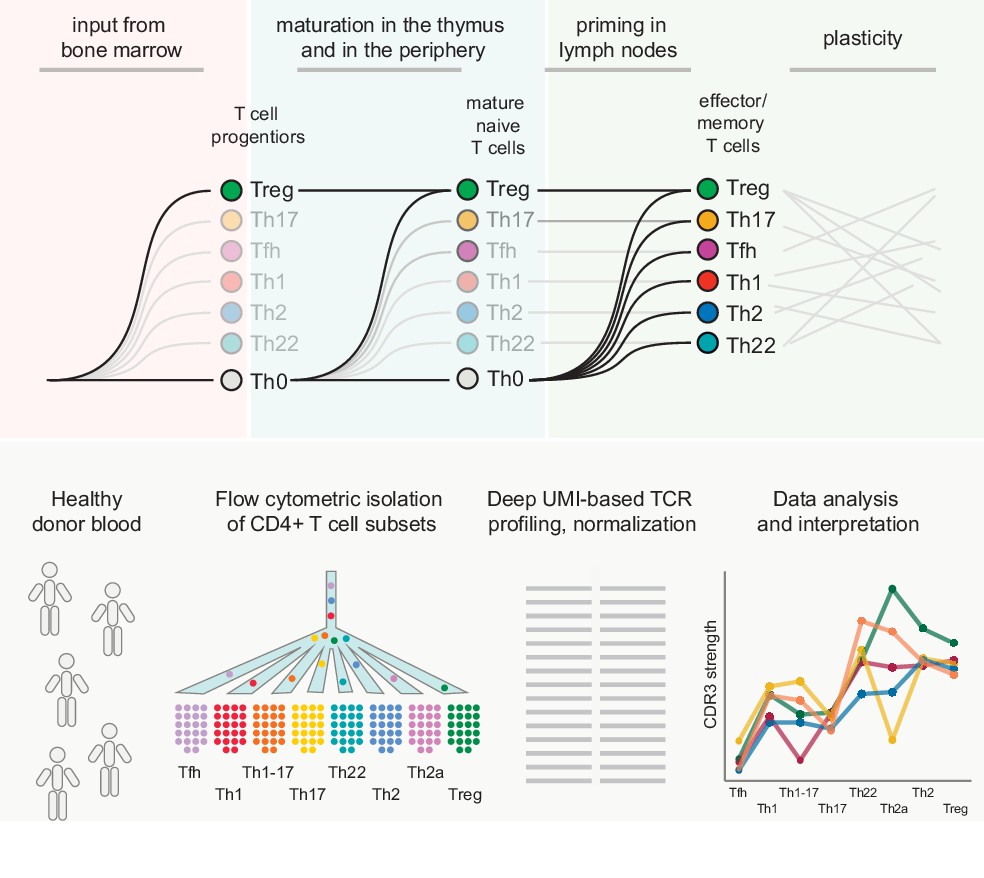
Trwy gydweithredu rwyf wedi dod â diddordeb hefyd mewn celloedd cynorthwyol CD4 + T a defnyddio fy arbenigedd didoli celloedd i helpu i ddeall y berthynas rhwng y gwahanol is-setiau cynorthwyol T, celloedd T rheoleiddiol (TREG) a chelloedd cynorthwyol ffoliglaidd T gan ddefnyddio dilyniannu dwfn derbynnydd celloedd T.
Kasatskaya SA *, Ladell K *, Egorov ES, Glowyr KL, Davydov AN, Metsger M, Staroverov DB, Matveyshina EK, Shagina IA, Mamedov IZ, Izraelson M, Shelyakin PV, Britanova OV, Price DA *, Chudakov DM *. Mae is-setiau celloedd T CD4 + dynol arbenigol yn swyddogaethol yn mynegi TCRs ffisecolegol wahanol. Elife. (2020) 9: e57063
https://iiif.elifesciences.org/lax/57063%2Felife-57063-fig1-v2.tif/full/full/0/default.jpg
Archwiliodd gwaith cydweithredol pellach gelloedd T CD4+ sy'n adnabod epitop cytolysin sy'n ddibynnol ar golesterol sy'n cael ei gadw ar draws sawl pathogen bacteriol gwahanol gan gynnwys niwmonia Streptococcus.
Ciacchi L*, van de Garde MDB*, Ladell K*, Farenc C, Poelen MCM, Miners KL, Llerena C, Reid HH, Petersen J, Price DA*, Rossjohn J*, van Els CACM*. Mae cydnabyddiaeth CD4 + T o epitop cytolysin colesterol wedi'i ddibynnu ar golesterol yn cynhyrchu imiwnedd gwrthfacterol eang. Imiwnedd (2023) 56 (5): 1082-1097.e6
--------
Trwy'r Athro Jamie Rossjohn (Prifysgol Monash, Melbourne, Awstralia) yr wyf wedi ymddiddori mewn celloedd T sy'n adnabod antigenau lipid a gyflwynir gan glycoproteinau CD1 wedi'u mynegi ar wahanol fathau o gelloedd sy'n cyflwyno antigen.
Wun KS, Reijneveld JF, Cheng TY, Ladell K, Uldrich AP, Le Nours J, Miners KL, McLaren JE, Grant EJ, Haigh OL, Watkins TS, Suliman S, Iwany S, Jimenez J, Calderon R, Tamara KL, Leon SR, Murray MB, Mayfield JA, Altman JD, Purcell AW, Miles JJ, Godfrey DI, Gras S, Price DA, Van Rhijn I, Moody DB*, Rossjohn J*. Autoreactivity celloedd T wedi'i gyfeirio tuag at CD1c ei hun yn hytrach nag at hunan-lipidau wedi'u cario. Nat Immunol. 2018 Ebrill; 19(4):397-406. doi: 10.1038 / s41590-018-0065-7.
Chen YL, Ng JSW, Ottakandathil Babu R, Woo J, Nahler J, Hardman CS, Kurupati P, Nussbaum L, Gao F, Dong T, Ladell K, Price DA, Duncan DA, Johnson D, Gileadi U, Koohy H, Ogg GS. Mae Streptococcus Grŵp A yn ysgogi celloedd T CD1a-autoreactive ac yn hyrwyddo llid psoriatig. Sci Immunol (2023) 8 (84): eadd9232
--------
Gan weithio gyda'r Athro David Price ym Mhrifysgol Caerdydd, rwyf hefyd wedi cyfrannu'n helaeth at ddealltwriaeth o ymatebion antigen-benodol amddiffynnol ac aberrant i wahanol pathogenau firaol, ymatebion imiwnedd antigen-benodol a achosir ymhlith yr henoed ar ôl brechu (cyhoeddiadau dethol isod) ac i gronfa ddata derbynyddion celloedd T mynediad agored (gellir dod o hyd i ddolen i'r olaf isod).
van Bockel DJ, Price DA, Munier ML, Venturi V, Asher TE, Ladell K, Greenaway HY, Zaunders J, Douek DC, Cooper DA, Davenport AS, Kelleher AD. Goroesiad parhaus clonoteipiau cyffredin o fewn ymateb celloedd T CD8 + HIV gag-benodol imiwnodominyddol. J Immunol (2011) 186 (1): 359-71. doi: 10.4049 / jimmunol.1001807
Chattopadhyay PK, Chelimo K, Embury PB, Mulama DH, Sumba PO, Gostick E, Ladell K, Brodie TM, Vulule J, Roederer M, Moormann AC *, Price DA *. Mae amlygiad malaria holoendemig yn gysylltiedig â gwahaniaethu celloedd T CD8 (+) sy'n benodol i firws Epstein-Barr wedi'i newid. J Virol (2013) 87 (3): 1779-88
Ladell K*, Hashimoto M*, Iglesias MC*, Wilmann PG*, McLaren JE, Gras S, Chikata T, Kuse N, Fastenackels S, Gostick E, Bridgeman JS, Venturi V, Arkoub ZA, Agut H, van Bockel DJ, Almeida JR, Douek DC, Meyer L, Venet A, Takiguchi M*, Rossjohn J*, Price DA*, Appay V*. Sail foleciwlaidd ar gyfer rheoli amrywiadau dianc cyn-imiwnedd gan gelloedd T CD8+ HIV-benodol. Imiwnedd (2013) 38 (3): 425-36
Neller MA*, Ladell K*, McLaren JE, Matthews KK, Gostick E, Pentier JM, Dolton G, Schauenburg AJ, Koning D, Fontaine Costa AI, Watkins TS, Venturi V, Smith C, Khanna R, Miners K, Clement M, Wooldridge L, Cole DK, van Baarle D, Sewell AK, Burrows SR, Price DA*, Miles JJ*. Mae rhagflaenwyr celloedd T CD8 ⁺ naïf yn arddangos repertoire TCR strwythuredig a dynameg dethol wedi'i yrru gan antigen cyfansawdd. Celloedd Immunol Biol (2015) 93 (7): 625-33
Culshaw A*, Ladell K*, Gras S*, McLaren JE*, Miners KL, Farenc C, van den Heuvel H, Gostick E, Dejnirattisai W, Wangteeraprasert A, Duangchinda T, Chotiyarnwong P, Limpitikul W, Vasanawathana S, Malasit P, Dong T, Rossjohn J*, Mongkolsapaya J*, Price DA*, Screaton GR*. Mae rhagfarn germline yn pennu adweithedd traws-seroteip mewn ymateb celloedd T CD8 + penodol i firws dengue cyffredin. Nat Immunol (2017) 18 (11): 1228-1237
Antrobus RD, Lillie PJ, Berthoud TK, Spencer AJ, McLaren JE, Ladell K, Lambe T, Milicic A, Price DA, Hill AV, Gilbert SC. Brechlyn ffliw sy'n ysgogi celloedd T i'r henoed: diogelwch ac imiwnogenigrwydd MVA-NP+M1 mewn oedolion dros 50 oed. PLoS Un (2012) 7 (10): e48322. doi: 10.1371/journal.pone.0048322
Dallan B, Proietto D, De Laurentis M, Gallerani E, Martino M, Ghisellini S, Zurlo A, Volpato S, Govoni B, Borghesi M, Albanese V, Appay V, Bonnini S, Llewellyn-Lacey S, Pacifico S, Grumiro L, Brandolini M, Semprini S, Sambri V, Ladell K, Parry HM, Moss PAH, Price DA; Grŵp Astudio RIV; Caputo A, Gavioli R, Nicoli F. Mae oedran yn effeithio'n wahanol ar ymatebion imiwnedd addasol a achosir gan frechlynnau adenofirol yn erbyn mRNA yn erbyn COVID-19. Heneiddio Nat (2024) 4 (8): 1121-1136
Shugay M, Bagaev DV, Zvyagin IV, Vroomans RM, Crawford JC, Dolton G, Komech EA, Sycheva AL, Koneva AE, Egorov ES, Eliseev AV, Van Dyk E, Dash P, Attaf M, Rius C, Ladell K, McLaren JE, Matthews KK, Clemens EB, Douek DC, Luciani F, van Baarle D, Kedzierska K, Kesmir C, Thomas PG, Price DA, Sewell AK, Chudakov DM. VDJdb: cronfa ddata wedi'i churadu o ddilyniannau derbynyddion celloedd T gyda phenodoldeb antigen hysbys. Asidau Niwclëig Res (2018) 46 (D1):D 419-D427
* Dynodi cyfraniad cyfartal.
--------
Yn ogystal, rwyf wedi cefnogi ymchwil COVID a COVID hir ers pandemig SARS-CoV-2 a chyn hyn dechreuais ar brosiect gyda'r Athro Duncan Baird sy'n archwilio celloedd imiwnedd sy'n cylchredeg mewn cleifion ag Enseffalitis Myalgig/Syndrom Blinder Cronig difrifol (ME/CFS).
--------
Ar hyn o bryd rwy'n goruchwylio ysgoloriaeth PhD trawsddisgyblaethol:
https://www.cardiff.ac.uk/stories/curbing-the-spread-of-tuberculosis
Addysgu
Addysgu:
- MBBCh: Tiwtor Academaidd
- Modiwlau SSC gradd MBBCh Blwyddyn 2 a 3: Imiwnoleg Ryngweithiol a Chlefydau Heintus
- Goruchwyliwr prosiectau rhyngosod MBBCh (iBSc)
- Goruchwyliwr PhD
Gwerthuso myfyrwyr:
- Gwerthuswr myfyriwr PhD
- Arholwr myfyriwr PhD
Bywgraffiad
Derbyniais fy M.D. o'r Charité, Prifysgol Humboldt, Berlin, yr Almaen.
Cyn fy mhenodiad ym Mhrifysgol Caerdydd, roeddwn i'n gweithio yn labordy yr Athro J. "Mike" McCune ym Mhrifysgol California San Francisco a Sefydliad Firoleg ac Imiwnoleg J. D. Gladstone, San Francisco, UDA, lle astudiais drosiant lymffocytau in vivo mewn bodau dynol gan ddefnyddio labelu isotopau sefydlog.
Yn flaenorol, tra'n gweithio gyda'r Athro David Nadal yn Ysbyty Plant y Brifysgol, Prifysgol Zurich, y Swistir, astudiais yr ymateb imiwnedd cynhenid i haint EBV.
Gweithiais hefyd gyda'r Athro Karin Moelling yn y Sefydliad Firoleg Feddygol, Prifysgol Zurich, lle datblygais a phrofais therapi gwrth-angiogenig wedi'i seilio ar plasmid DNA gyda neu heb therapi imiwnomodulatory mewn model melanoma cyn-glinigol. Yn ystod y cyfnod hwn, gweithiais yn glinigol yn Ysbyty Plant y Brifysgol, Prifysgol Zurich, y Swistir.
Archwiliodd fy nhraethawd ymchwil MD yn y Charité, Prifysgol Humboldt, Berlin, yr Almaen, a yw granulocytes niwtroffilig mewn vasculitis cymhleth imiwnedd croenol hunan-gyfyngol yn marw trwy apoptosis neu necrosis.
Mae fy nhraethawd PhD yn archwilio trosiant ac ehangu antigen-benodol in vivo yn ystod ysgogiad imiwnedd cronig.
Rwy'n arbenigwr mewn sytometreg llif aml-baramedr a didoli celloedd (gan gynnwys didoli celloedd heintus ar lefel CL3) ac ar hyn o bryd rwy'n rhedeg ac yn cefnogi sytometreg llif sbectrol gyda delweddu gan ddefnyddio BD FACSDiscover S8, y gellir ei archebu drwy Wasanaethau Biotechnoleg Canolog (CBS) yn Ysgol Meddygaeth Prifysgol Caerdydd. https://www.cardiff.ac.uk/central-biotechnology-services
Meysydd goruchwyliaeth
Ar agor ar gyfer ceisiadau tan 6 Mawrth 2026 (ar agor i fyfyrwyr o'r DU / UE, ar gyfer yr olaf mae meini prawf ychwanegol yn berthnasol)
Goruchwyliaeth gyfredol

Tamas Barry
Ymgysylltu
Soapbox Science speaker in Cardiff (2016).
I host Sixth form students in the laboratory for work experience (prior to the SARS-CoV-2 pandemic and hopefully again in the future).
Public Uni speaker at Chapter Arts Centre in Cardiff (2018).
Year 3 primary school science outreach (5th March 2019, 27th & 28th June 2019#, 8th July 2019).
# https://twitter.com/MrAKnottTreg/status/1144363502859169792